

When Daniel Craig was confirmed as the new James Bond in 2005, social media as we know it today was in its infancy. Facebook was barely a year old, and there was no Instagram or Twitter (X) yet. Still, the outrage that the move generated in a part-online world could have set off a forest fire. After all, Pierce Brosnan had played detective or spy since the 1980’s television drama Remington Steele, and replacing him as MI6’s most famous agent was unthinkable.
Audiences even seemed to have forgiven Brosnan’s last appearance as Bond in the kitschy Die Another Day, turning it into a box office hit and the most successful in the franchise since its inception.
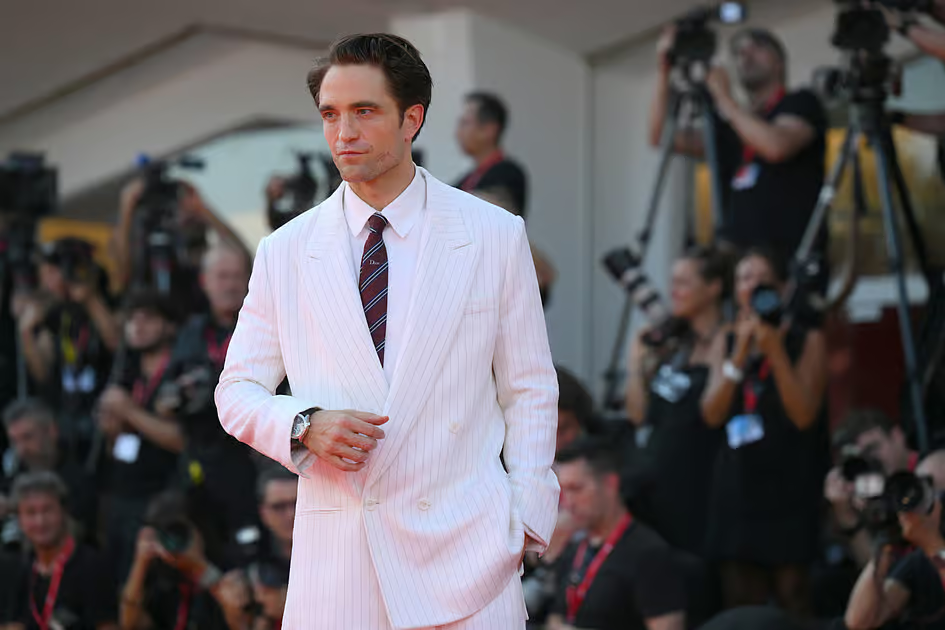
Compare that with the relatively muted reaction to Robert Pattinson assuming the mantle of Bond, this time from Daniel Craig, the man credited with rebooting the film franchise now owned by Amazon MGM Studios. Perhaps audiences, as well as the world surrounding them, have moved on.
Robert Pattinson is James Bond pic.twitter.com/3GulkhblDp
— James Bond (@007) November 16, 2026
Now Pattinson is no greenhorn. He is an established star in his own right, with a slew of cult classic hits to his credit. Millennials (including me) would remember him as Edward Cullen from the Twilight films or Cedric Diggory from Harry Potter and the Goblet of Fire, but he has also starred in Christopher Nolan’s The Odyssey (2026) and Tenet (2020), Primetime and Dune: Part 3.
His take on the Batman in The Batman (2022) has had fans comparing it favourably to THE film franchise considered the gold standard on the DC Comics character: Nolan’s trilogy of Batman Begins (2005), The Dark Knight (2008), and The Dark Knight Rises.
So, Pattinson has had extensive experience proving naysayers wrong, and there’s every reason we can expect an encore. The Bond universe, too, has undergone multiple changes over the years, and it would be interesting to see how he adapts to them.
No one likes playing Bond
Contrary to public perception that James Bond is a role that establishes and actor’s career, no actor who has played it has had something nice to say about it. Beginning with the OG, Sean Connery.
Connery quit the franchise after doing five films only to return to play Never Say Never Again and then quitting for good. Even when he played Bond, Connery starred in films such as Marnie and The Hill, considered some of the actor’s greatest performances. “I’d like to kill Bond if I meet him,” he is once famously quoted as saying. Once he was out of the franchise, he starred in memorable films such as Murder on The Orient Express, The Anderson Tapes and The Untouchables.
George Lazenby’s exit from the franchise was less honourable after just one film, On Her Majesty’s Secret Service. Timothy Dalton claimed that he didn’t have a friendly experience on sets, prompting him to quit, while Brosnan’s exit was reportedly over a phone call.
Craig famously told TimeOut London in an interview that he’d “break this glass and slash my wrists” than make another James Bond film. He, however, returned to reprise the role in No Time to Die.
Waning influence of the ‘3Gs’
Think of any Bond film over the decades and it would be characterised by the three Gs: guns, girls and geopolitics. Beginning with Dr No (1962), with Sean Connery portraying the titular role, every film served up glamour in oodles. From Ursula Andress to Eunice Gayson, Daniela Bianchi, Honor Blackman and Diana Rigg, their roles had more to do with catering to the male gaze than, let’s say, carry forward the plot.
Miss Moneypenny’s roles in the Sean Connery, Roger Moore and even Brosnan era was just to dovingly glance at the dashing agent every time he entered the MI6 HQ and marvel at his hat throws, while also praying that she gets to go on a date with him.
Thankfully, that is a trend that has waned, with women actors outshining him. It was only in Skyfall (2012) that we’re introduced to her first name, Eve, with her entering the field as a dashing agent. In No Time To Die, Lashana Lynch even gets assigned the 007 number.
The other two Gs will in all probability remain a recurring theme in subsequent Bond movies.
A relic of the Cold War era?
Let’s face it, the James Bond films as well as their source material, the novels by Ian Fleming, largely belonged to the Cold War era when the world divided into two blocs. Hollywood came to America’s rescue, painting the then USSR spies or officials as villains in the Bond movies, save for exceptions such as Goldfinger. That trend extended well into the 1990s, with Brosnan’s GoldenEye, which released after the USSR disintegrated. In later years, the Bond universe has managed to find villains all around.—
And that brings us to the burning question: Can Pattinson pull it off? History offers us a precedent. Daniel Craig, a relative newbie in 2005, did exactly that and gave us a Bond that everyone liked—gritty, vulnerable and dashing, while also saving the world. The franchise also moved away from the cliche of gadgets coming to the spy’s rescue.
And let’s not forget, Denis Villeneuve is helming Bond 26, slated for a 2028 release. His interpretation of the role can take the baton from Craig and run ahead, much to the delight of audiences.
The signs indicate that Pattinson will be an impeccable Bond.
Source: Khaleej Times
