

DUBAI, 20th September, 2026 (WAM) — Participants at the 4th International UAE Rare Disease Society Congress called for the wider use of artificial intelligence (AI) in diagnosing and treating rare diseases.
They highlighted AI’s potential to reduce the diagnostic journey for rare diseases from years to just minutes by analysing vast amounts of medical and genetic data with exceptional accuracy.
At the conclusion of the Congress in Dubai today, participants also underscored the need for financial and logistical support for research aimed at advancing the discovery, diagnosis and treatment of rare diseases, particularly those for which no treatment is currently available.
Dr. Nuha Al Zaabi, President of the 4th International UAE Rare Disease Society Congress, Consultant in Genetic and Metabolic Disorders and Board Member of the UAE Rare Disease Society, said participants had highlighted the importance of sharing the UAE Genome Programme’s findings and experience with countries worldwide so they can benefit from the programme’s outstanding results in treating numerous conditions and reducing hereditary and genetic diseases.
She added that improving patient outcomes requires a sustained partnership between patients, families, the healthcare sector, researchers, government entities and the wider community. Participants also stressed the importance of ensuring that the voices of people with rare diseases and their families reach all segments of society, particularly doctors and specialists across every medical discipline, so they understand how to support people living with rare diseases. They also called for greater awareness of genetic diseases among doctors and specialists, particularly internal medicine specialists, as well as government entities and other organisations, with a focus on rare diseases in adults.
Participants also emphasised the importance of premarital medical screening, the early diagnosis and prevention of rare diseases, and wider adoption of the personal physician concept, under which a doctor provides care tailored to a specific individual, including access to gene therapy, to help reduce the impact of rare diseases.
They called for physiotherapy to be made available to people with rare diseases to help limit complications and prevent symptoms from worsening. This support should extend beyond children and adolescents to adults, alongside the healthcare and assistance they require. Participants also stressed that health insurance companies must cover rare diseases, particularly physiotherapy, as it is essential for many conditions.
They highlighted the importance of establishing a dedicated system for people of determination to ensure rapid access to treatment, along with a clear policy and framework for treating people of determination, especially those living with rare diseases. They also recommended linking the People of Determination card to a comprehensive system covering all government entities, allowing each person’s condition and needs to be identified immediately and easing the burden on families.
Participants further stressed the need to reach people living with rare diseases, provide the support they require and stand alongside them and their families.
Participants also called on the education system to take account of the circumstances and needs of people with rare diseases and to work with families to provide the education they require. Where a student’s condition makes in-person attendance difficult, distance learning should be offered as an alternative. They also emphasised the need to educate families about rare diseases and guide them to the centres and hospitals that provide treatment for their children’s conditions.
The third and final day of the Congress featured several key sessions and workshops examining a range of rare diseases, their treatments and approaches to care. The sessions offered practical guidance to help families manage nutrition and daily follow-up, while allowing patients and families to exchange experiences and build sustainable skills.
They also highlighted hypophosphatasia and gave people living with the condition an opportunity to share their experiences, strengthen connections between families and medical teams, and turn knowledge into effective support, empowerment and advocacy.
The final day also examined epidermolysis bullosa, its symptoms and complications, and provided guidance on wound care, dressing changes and infection prevention. Participants shared further inspiring experiences and practical knowledge. The Congress’s scientific programme reflected a comprehensive approach to rare diseases, from prevention and early diagnosis to emergency care, precision treatments, home care, and social and ethical support. Families and people of determination remained at the heart of the event and its discussions.
The 4th International UAE Rare Disease Society Congress gave the inspiring Rand a platform and hosted a signing ceremony for her book, Dana and Rand A Journey of Hope Despite Rarity and Pain.
The ceremony was attended by Dr. Hussein Al Rand, Assistant Undersecretary for the Public Health Sector at the Ministry of Health and Prevention. Distinguished guests also signed the book, bringing Rand great joy and fulfilment as her dream of sharing her story through a book she authored became a reality. Rand lives with Kenny-Caffey syndrome and is the author of Dana and Rand, which recounts her journey of hope despite the rarity and pain of the condition, as well as the challenges she and her sister Dana faced.
Told in Rand’s own voice, the book gives her an opportunity to share a message with everyone living with a rare disease: beginnings may be difficult, but perseverance can lead to the most rewarding outcomes.
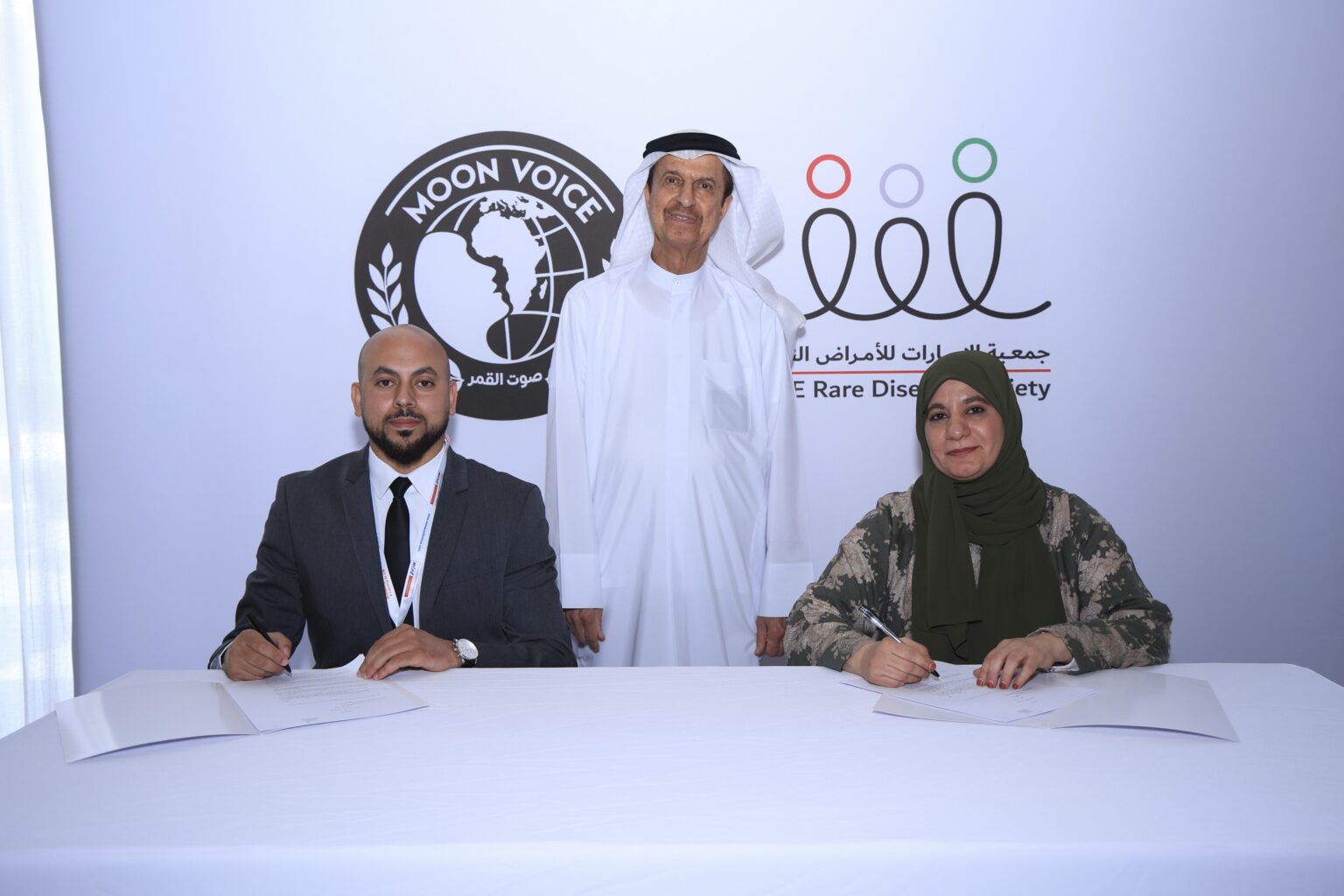
On the sidelines of the 4th International UAE Rare Disease Society Congress, a cooperation agreement was signed between the UAE Rare Disease Society and Morocco’s Sawt Al Qamar Association, a charitable organisation based in Fez that supports children with xeroderma pigmentosum and advocates for their rights.
The agreement was signed by Nafisa Tawfiq, Chairperson of the UAE Rare Disease Society and Chair of the Organising Committee of the 4th International UAE Rare Disease Society Congress, and Ahmed Zainoun, President of Morocco’s Sawt Al Qamar Association.
The 4th International UAE Rare Disease Society Congress was held at Le Méridien Dubai from 18th to 20th September under the theme ‘United for Rare: Empowering Families, Advancing Care.’
Held under the patronage of the UAE Ministry of Health and Prevention, the Congress brought together leading experts, physicians, researchers, specialists, patient advocates and families from the UAE and around the world to exchange knowledge and review the latest advances in the diagnosis and treatment of rare diseases.
The scientific programme covered key topics including genetics and genomics, metabolic disorders, premarital genetic screening, precision and innovative therapies, artificial intelligence and research ethics. The Congress provided a vital platform for sharing pioneering research, strengthening collaboration and accelerating efforts to diagnose and treat rare diseases and support patients.
The participation of government entities and national institutions, particularly in the Family Programme, reflected an integrated institutional effort to raise awareness of rare diseases, support patients and their families, and broaden community and knowledge partnerships.
The 4th International UAE Rare Disease Society Congress 2026 was accredited by the European Accreditation Council for Continuing Medical Education (EACCME) for up to 15 European continuing medical education credits.
Source: Emirates News Agency
