
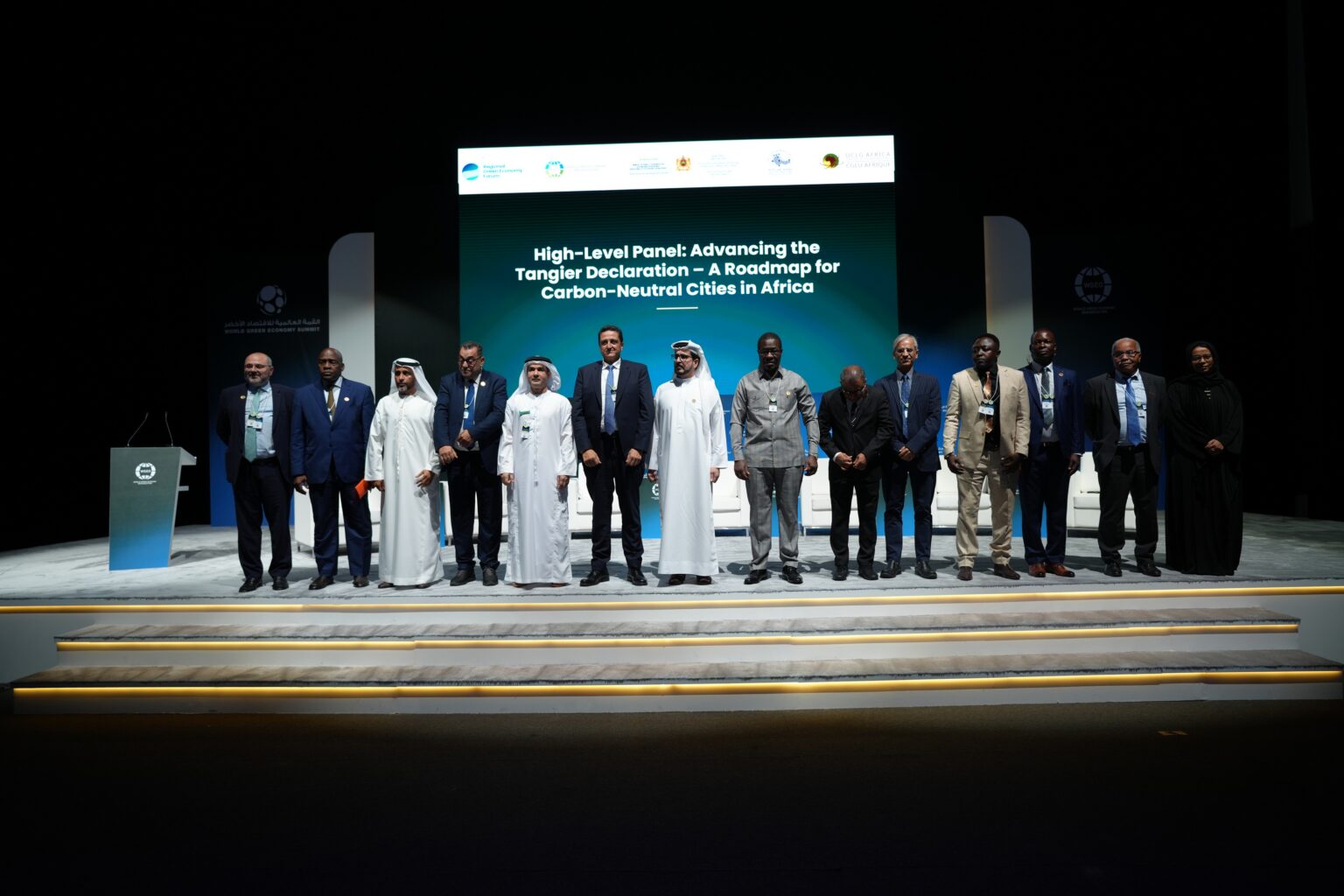
DUBAI, 8th October, 2026 (WAM) — Under the patronage of His Highness Sheikh Mohammed bin Rashid Al Maktoum, Vice President, Prime Minister and Ruler of Dubai, the Dubai Supreme Council of Energy, Dubai Electricity and Water Authority (DEWA) and the World Green Economy Organisation (WGEO) are organising the 12th edition of the World Green Economy Summit (WGES) on 21 and 22 October 2026 at the Dubai World Trade Centre, under the theme ‘From Success to Scale: Showcasing the Green Economy’.
This year, WGES will focus on four main thematic pillars: Energy Technology & Infrastructure; Business Strategy & Transition; Water & Food Security; and Finance. It will also address three cross-cutting themes: Artificial Intelligence (AI), Governance and System Enablers.
The Business Strategy & Transition thematic pillar examines how leading organisations are embedding green growth into their core strategies by capturing valuation premiums, redesigning business models around circular principles, addressing the green skills gap and navigating an evolving landscape of trade policies, laws, regulatory instruments and mechanisms that require or incentivise companies to reduce greenhouse gas emissions, such as carbon taxes, emissions trading systems, energy efficiency standards and carbon footprint disclosure requirements. The focus is on the factors that distinguish organisations leading the transition from those still adapting to it.
“WGES seeks to pave the way for sustainable frameworks and a flexible legislative and regulatory environment that help attract green finance and balance economic growth with environmental protection. The green economy has surpassed US$5 trillion in annual value and is growing at twice the rate of conventional industries. Yet many organisations continue to treat sustainability as a compliance requirement or cost centre rather than a strategic growth driver. By bringing together policymakers, decision-makers and financial institutions worldwide, the summit transforms shared expertise into action – addressing challenges, setting priorities and accelerating innovation in resource management, design and manufacturing. In doing so, it makes sustainable solutions the norm and advances growth, resilience and prosperity for current and future generations,” said Saeed Mohammed Al Tayer, Vice Chairman of the Dubai Supreme Council of Energy, MD & CEO of DEWA and Chairman of WGEO.
Echoing this vision, WGES 2026 speakers highlighted the critical role of sustainable finance, technological innovation, circular economy solutions and cross-sector collaboration in accelerating the transition to a greener and more resilient future.
Syed Adeel Abbas, Regional Climate Lead for the Middle East, North Africa, Afghanistan and Pakistan at the World Bank, said, “Mobilising private capital at the scale needed for climate and development remains one of the defining challenges of our time. Across the Middle East and North Africa region and beyond, growing interest in green bonds and other sustainable finance instruments is helping connect investors with opportunities that support both economic transformation and climate objectives.”
Aisha Al Abdooli, Director of Green Development and Environmental Affairs, Ministry of Climate Change & Environment, said, “In the UAE, we are working to embed sustainability across policy, economic development and decision-making, supported by innovation, robust environmental data and strong partnerships across government, the private sector, academia and international organisations.”
Yousif Lootah, founder and CEO of Lootah Biofuels, said, “The next evolution is the intelligent circular economy, where robotics, artificial intelligence and blockchain work together to transform how waste is collected, tracked and converted into clean energy. From Dubai, we can show the world that the circular economy is not only about protecting our future; it is about building the economy of the future.”
Jessica Robinson, Partner at Solve Strategies, said, “At WGES 2026, I look forward to presenting case examples from Africa and the Gulf that illustrate how climate projects are already generating measurable financial returns, rather than promising them at some future point.”
Nick Falkowski, co-founder and CEO of Meaningful Planet, said: “Financial sustainability and environmental sustainability are not competing objectives. Building a better, more secure and prosperous future requires more than new solutions and technologies. It also requires us to fundamentally rethink how existing industries work.”
Valerio Capizzi, Global Lead for Utilities at ING Bank, said, “The path to net zero requires not only investment and technology, but also collaboration, resilience and new approaches to balancing affordability, security and sustainability.”
Priya Sarma, Head of Corporate Affairs and Sustainability at Unilever Beauty & Wellbeing (GCC, Türkiye, Pakistan and Bangladesh), said, “From circularity and low-carbon innovation to sustainable manufacturing and consumption, we have seen that real progress happens when purpose is matched with partnership and action.”
Yohaan Cama, Head of Corporate Sustainability at Gems Education, said: “In the education sector, we have seen that sustainability is far more than an environmental initiative. It can drive operational efficiencies, strengthen resilience, unlock access to capital and create long-term value for stakeholders. Schools also have a unique responsibility and opportunity to shape the behaviours, mindset and decision-making of future generations, making education a powerful catalyst for a more sustainable economy.”
Source: Emirates News Agency
